

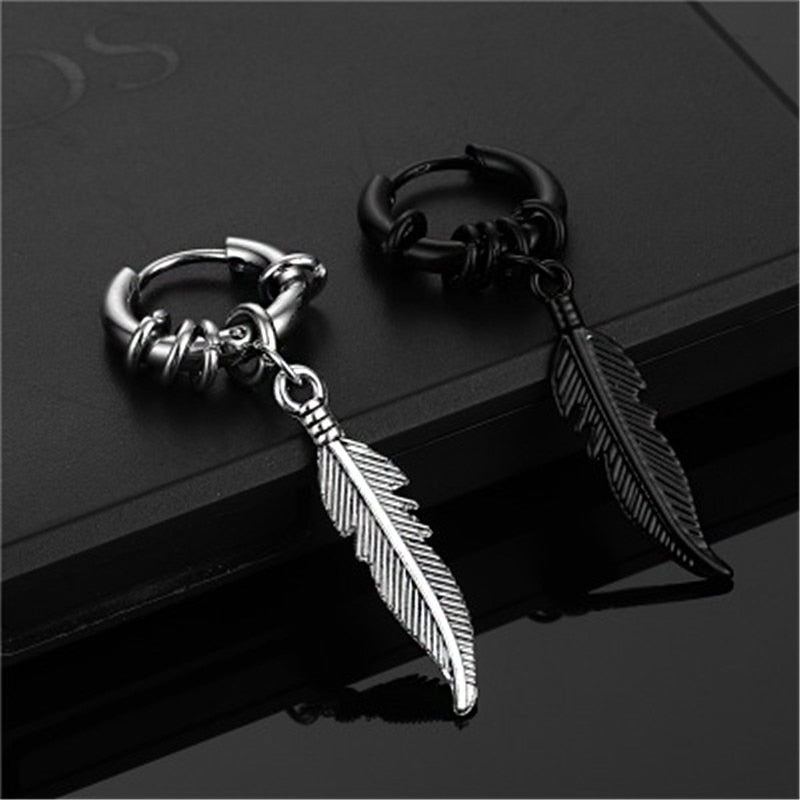


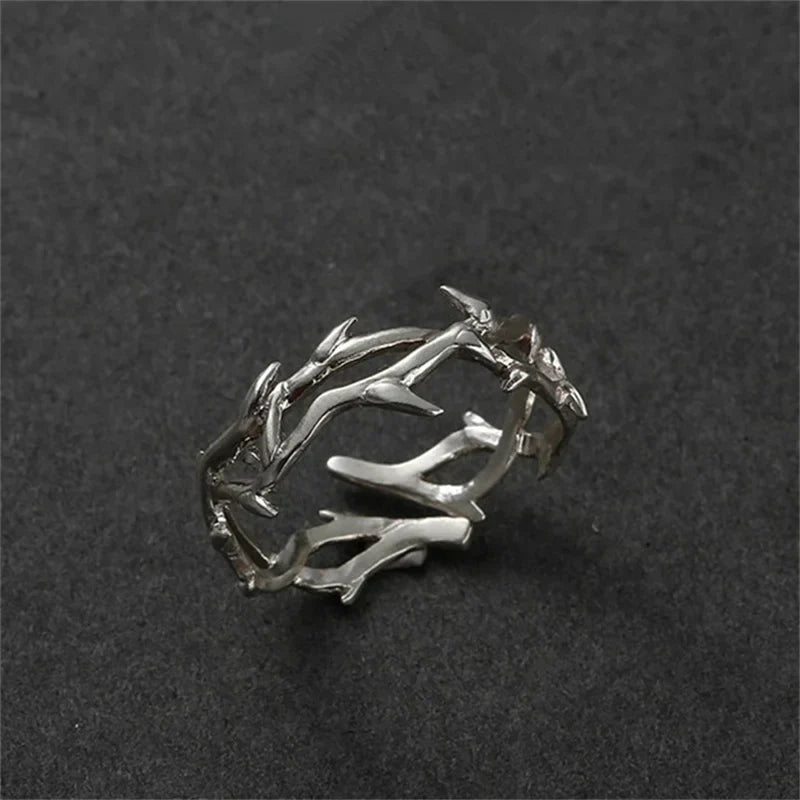


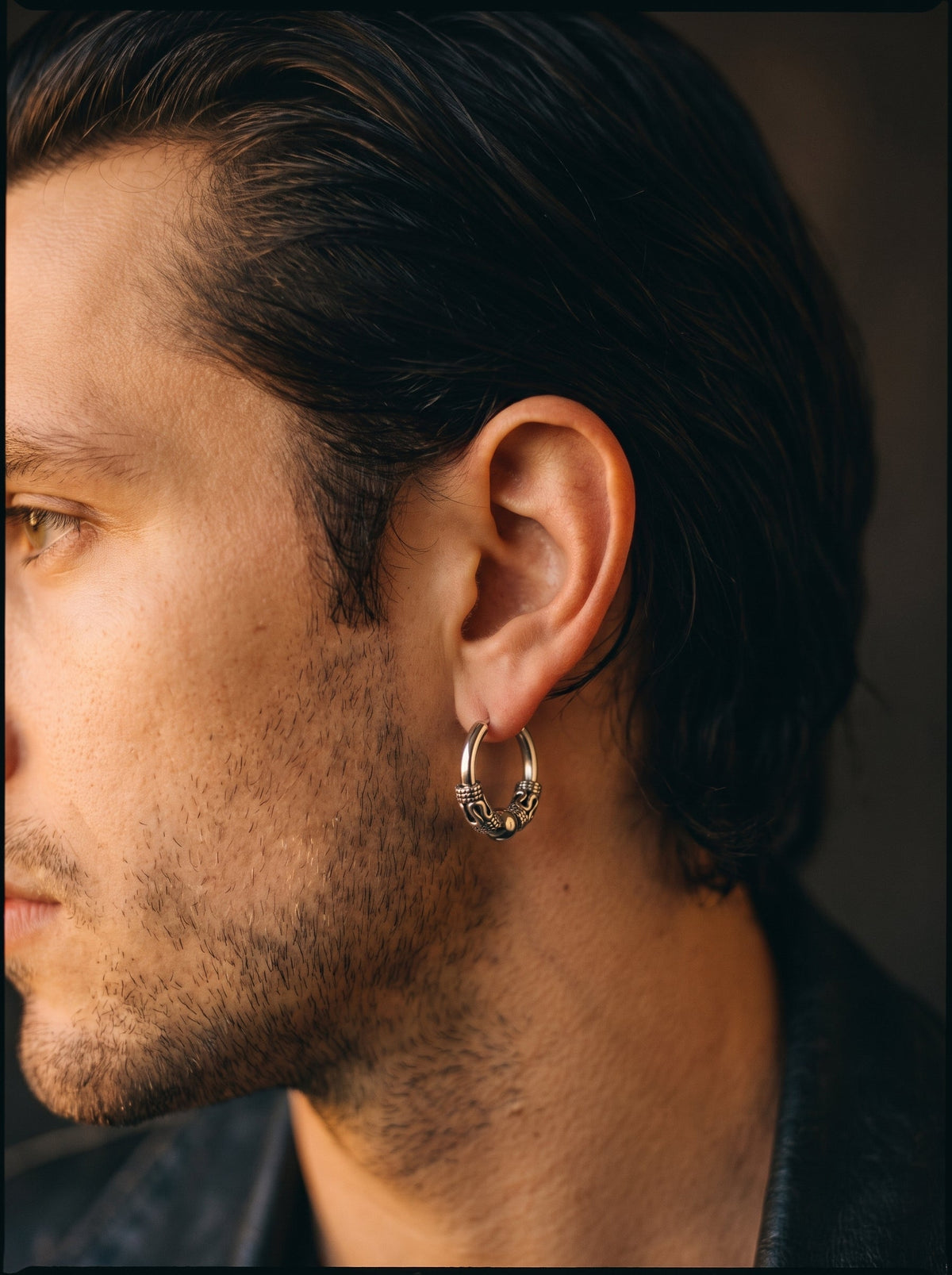
- The "left for straight, right for gay" code (or the reverse) comes from a North American rumor from the 1970s, never official or universal.
- Long before this myth, sailors, pirates and Vikings already wore earrings with no rule about which side.
- Today this code no longer applies anywhere: choosing an ear comes down to comfort, style or occasion, not a message.
No, there is no serious rule stating that wearing an earring on the right or left means anything specific for a man. The famous "gay side" is a legend born in the 1970s in the United States, never standardized even back then, and now forgotten by most people. The only message your jewelry sends is the one you choose to give it.
À découvrir


Whether you wear a discreet ring or a bolder piece from our men's earrings collection, the side you choose no longer says anything about your orientation or your opinions. It says your style.
Where Does the "Gay Side" Myth Come From?
The rumor spread in the Anglo Saxon world starting in the 1970s, as visible gay culture emerged in the United States. The idea: a pierced ear would signal orientation depending on the side, left for straight men, right for gay men (or the reverse depending on the region, which already reveals the absence of a fixed rule). It spread by word of mouth, without ever resting on an official code or any real consensus, even within the communities it claimed to describe. From the 1990s onward, fashion moved past this reading: athletes, musicians and executives wore earrings on both sides without anyone reading it as a coded signal anymore. To learn more about what an earring can really represent for a man, we cover it in a dedicated article.
Before the Myth: A Much Older Tradition
Men wearing earrings goes back long before the 1970s and has nothing to do with any single community. Sailors sometimes wore one to pay for a proper burial in case of a shipwreck far from home, or to mark crossing the equator. The Vikings wore jewelry, earrings included, as a sign of warrior status. From pirates to European royal courts, the pierced ear has crossed centuries without any of these traditions ever dictating a specific side.
How to Choose Your Side Today
With no code left to follow, it comes down to practical criteria, covered in our guide to choosing your earring:
- Sleep comfort. Many men avoid the ear they sleep on most, to avoid irritating the piercing at night.
- The workplace. A discreet stud works almost anywhere, unlike a bolder piece.
- The style you're after. A minimalist ring is often worn alone, while a bolder hoop pairs up easily on both sides.
- One ear or two. Nothing requires symmetry. A single bold earring has as much character as a matching pair.
Jewelry That Adapts to Your Style, Not the Other Way Around
Once the myth is out of the way, the real question is the model. Our range goes from the dressier cross earring to the stone earring (a brilliant cut zircon, not a real diamond), to pieces with a gothic or biker edge for those who like bolder symbols. All our pieces are stainless steel, hypoallergenic, built to last, and never turn green or black over time.

Frequently Asked Questions
Does the left or right side still have a religious or cultural meaning anywhere?
In certain very specific subcultures, a local custom may still exist, but no global or even national rule exists today. In the US as in most Western countries, the side chosen for a men's earring no longer points to any recognized code.
Can wearing an earring cause problems at work?
It mainly depends on the industry and company culture, not the side chosen. A discreet steel stud works almost anywhere, while a very formal environment may call for more restraint. The side of the ear never factors into it.
Do you need to wear the same style in both ears?
No, nothing requires it. Many men today wear a single earring, or two different styles for a more personal look. What matters is choosing jewelry you like, not following a conventional symmetry.
Stag Bijoux, stainless steel jewelry for men, online.
Leave a comment
This site is protected by hCaptcha and the hCaptcha Privacy Policy and Terms of Service apply.